
Ham Radio in a Smartphone World — Still Relevant in 2026

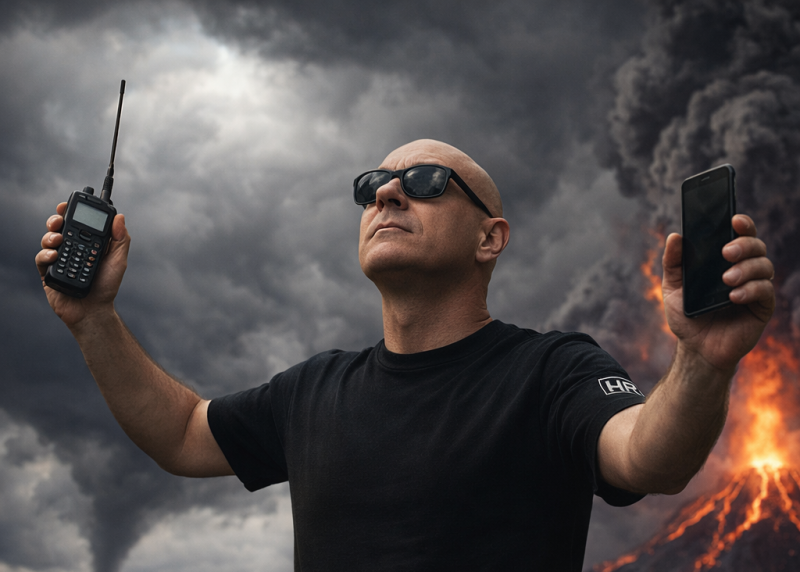

Ham Radio in a Smartphone World — Still Relevant in 2026
In 2026, it’s almost impossible to imagine daily life without a smartphone. These pocket supercomputers connect us to friends, news, maps, cameras, and instant messaging in a heartbeat. Yet even in a world dominated by mobile networks and digital ubiquity, ham radio remains not just relevant — it thrives. Amateur radio continues to offer communication capabilities, community engagement, emergency resilience, and technical exploration that smartphones simply can’t replace.
Ham Radio’s Core Strength: Independent Communication
One of amateur radio’s enduring strengths is its ability to communicate without relying on smartphones, internet infrastructure, or commercial networks. Ham radio operates on dedicated frequency bands regulated internationally by the FCC and the International Telecommunication Union (ITU), which ensures that these channels remain available even when cell networks fail. This is why many hams emphasize being able to communicate directly from one operator to another using radio waves (simplex)— a capability that doesn’t depend on towers or network coverage. Retevis Walkie Talkie
This is not just theoretical: ham radio has been a critical tool during real emergencies. When cell towers go down in natural disasters like hurricanes or wildfires, amateur operators often keep information flowing between affected communities and emergency services. It’s a legacy of public service communication that predates modern mobile networks and remains one of amateur radio’s most essential roles today. Retevis Walkie Talkie
Beyond Tradition: Ham Radio and Digital Innovation
Contrary to the idea that ham radio is antiquated, many operators are embracing modern digital technologies. Ham radio’s digital modes — such as FT8, D-STAR, DMR, C4FM and others — allow hams to send text, images, and data over RF with remarkable efficiency. Digital modes are widely used to make long‑distance contacts (even with very low power) and bring amateur radio (and internet) into stark alignment with modern data communication techniques. Anytone
Platforms like PSK Reporter — a global signal reporting network — show in real time where stations are being heard across the world by collecting digital mode reports and mapping their reception. This sort of global visibility would have been unimaginable in ham radio’s early decades, yet it’s now common thanks to integration with computer software and data networks. Wikipedia
Smartphones + Ham Radio — Complementary, Not Redundant
In a smartphone era, some might ask: “Why carry a radio when I have voice and messaging in my pocket?” The answer lies in how the two work together, rather than against one another.
One exciting area of crossover is smartphone‑to‑radio integration. Hobbyists and developers have created hardware that hooks a radio transceiver to a smartphone, effectively turning the phone into the user interface for a ham radio transceiver. For example, open‑source designs using small microcontrollers like the ESP32 can make an Android device control a radio module for APRS (Automatic Packet Reporting System), scanning, and basic transmission — all through familiar phone apps. Hackaday
Similarly, smartphone apps and Bluetooth connectivity are now commonly used with digital mode interfaces and hotspots. Hotspot devices — like Pi‑Star or Open-Spot — act as bridges between handheld radios and internet networks, allowing hams to talk to repeaters or other operators around the world using digital voice modes. In these scenarios, the smartphone becomes the bridge connecting traditional RF communication with global networks. Reddit
This model reflects a key truth: ham radio isn’t being replaced by smartphones; it’s being enhanced by them.
A Community of Makers, Experimenters, and Helpers
The relevance of amateur radio extends beyond communication into education, experimentation, and community. Ham radio remains a unique blend of hobby, science, and service. Many radio operators enjoy building antennas, experimenting with propagation, and mastering the physics of radio wave behavior — skills that aren’t typically part of a smartphone experience. Austin Amateur Radio Club
Part of ham radio’s appeal lies in this hands‑on nature. Whether experimenting with satellite communications, bouncing signals off the moon, or learning Morse code (yes, many still do!), hams engage with technology at a depth that accelerates learning and sparks curiosity. Austin Amateur Radio Club
And let’s not forget the social aspect. Ham radio networks and hamfests bring operators together across continents and cultures. A conversation over the airwaves — whether brief or long — connects people in ways that feel adventurous and personal. The sense of achievement in making contact with a distant station is something many hams describe as addictive. Wikipedia
Real‑World Uses That Smartphones Alone Can’t Replace
Here are a few concrete areas where ham radio remains indispensable:
Emergency Preparedness:
When traditional communication infrastructure fails — cell towers offline, internet down — ham radio can continue functioning independently. It serves as a “last resort” channel for coordination among responders, volunteers, and affected communities. Retevis Walkie Talkie
Public Service Communication:
Amateur radio operators support events like marathons, parades, and search‑and‑rescue missions. Radio networks allow many parties to share information simultaneously — something one‑to‑one smartphone conversations can’t efficiently do. Reddit
Learning and Innovation:
From antenna design to digital signal processing, ham radio continues to be a laboratory for learning and experimentation — often contributing technical insights that echo into broader wireless innovations. Medium
Smartphones Enhance Amateur Radio’s Reach, Not Replace It
Smartphones have undoubtedly changed the way we communicate. But in ham radio, they serve more as powerful companions than replacements. Whether helping visualize signal reports, interfacing digital modes, or giving operators a familiar interface for complex tools, smartphones have expanded ham radio’s reach. But they haven’t replaced the core capability: independent, flexible, community‑oriented communication.
What About You? How Do You Use Your Phone in Ham Radio?
Now it’s your turn to weigh in.
- Do you use your smartphone with digital modes like FT8, JS8Call, or hotspots?
- Have you connected a phone to a radio interface for APRS or logging, what about ALLSTAR?
- Or do you prefer to keep your phone and your ham gear separate?
Comment below and tell us how you integrate modern tech into your ham setup — or why you prefer traditional approaches. Your insights could help other hams bridge the gap between old and new!
73 for now, and be safe!